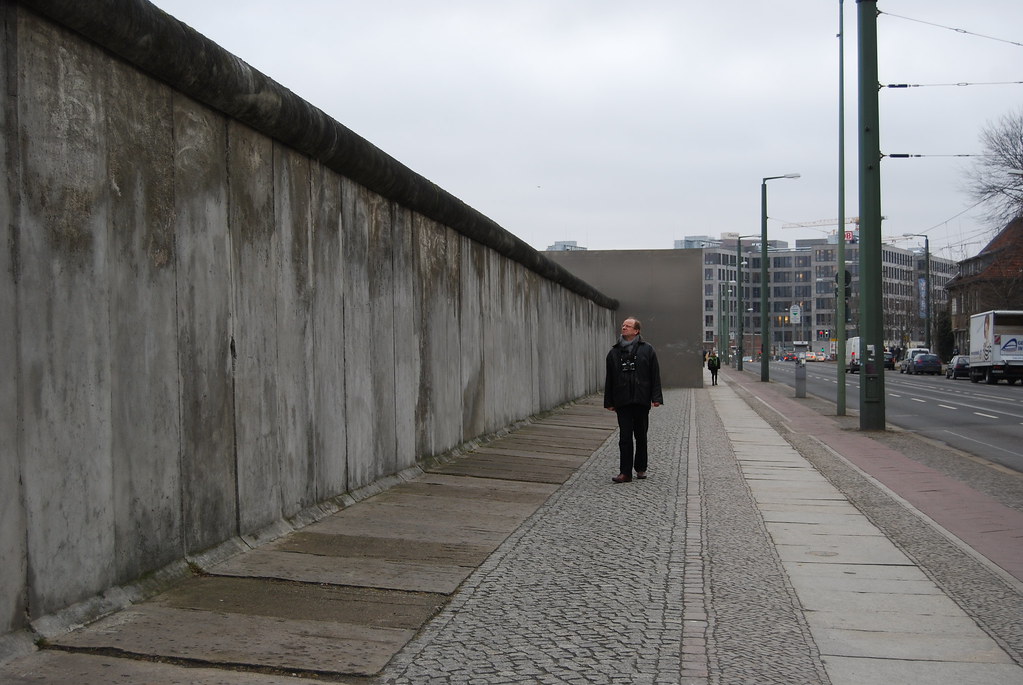
Berlin offered me an opportunity to see a city that has truly attempted to move past its divided history. The Berlin Wall ran between Soviet and western allied nation-controlled areas directly through the core of the city starting in 1961. Throughout the tense period of 30 years that followed the wall was bolstered and rebuilt on numerous continuously and it also began to stretch further north and south along what would become the iron curtain into hundreds of miles across European soil.
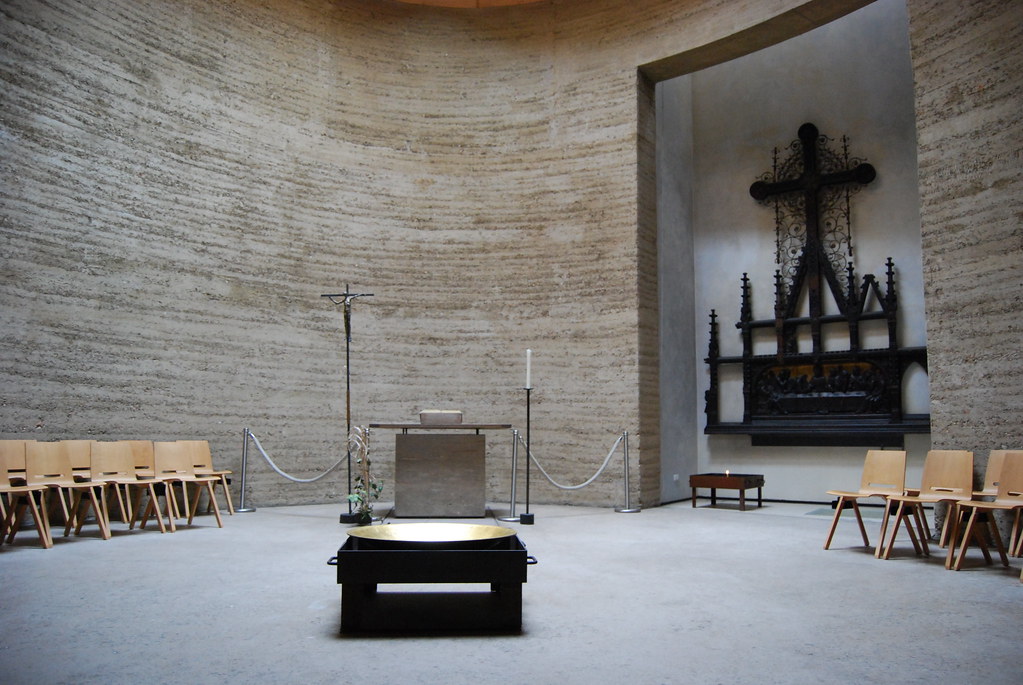
One interesting monument within the area that was once the "death strip" within the Berlin Wall is the Chapel of Reconciliation which replaced a church that previously stood in its place before being torn down to make room for the wall. Notice the metal strip along the ground in front of the church in the photo below which follows the footprint of the building.
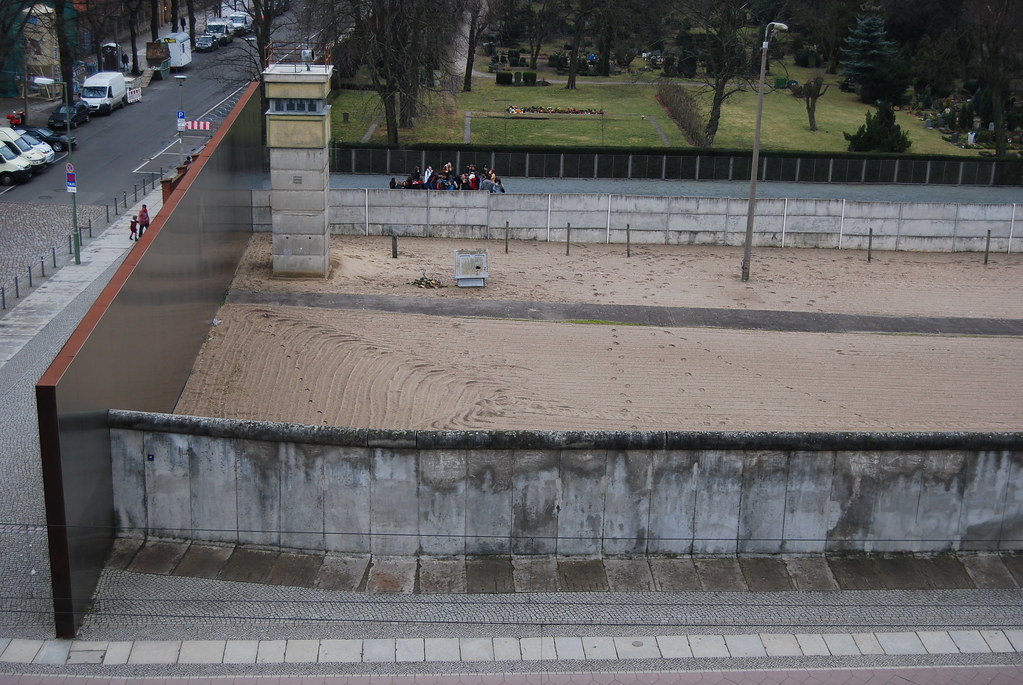
In many areas within the core of Berlin where the wall separated dense building complexes, there have been attempts to reconstruct, memorialize, and reinterpret the wall. Much of this land has become urban park area and outdoor museums to tell the story of the cold war in Europe.
 |
| Recreated portion of the wall with the sandy 'death strip' within concrete barriers. The guard tower is an original piece used by the Soviet army to ensure no East Berliners were escaping and to "fend off the threat of the capitalist west". |
 |
| A portion of the wall is reinterpreted through vertical steel rods along its original path at its final built up height. When seen from the side as it is above you are able to see people and a tram who would have been in West Berlin passing by but when seen from an angle it looks like a solid surface. |
 |
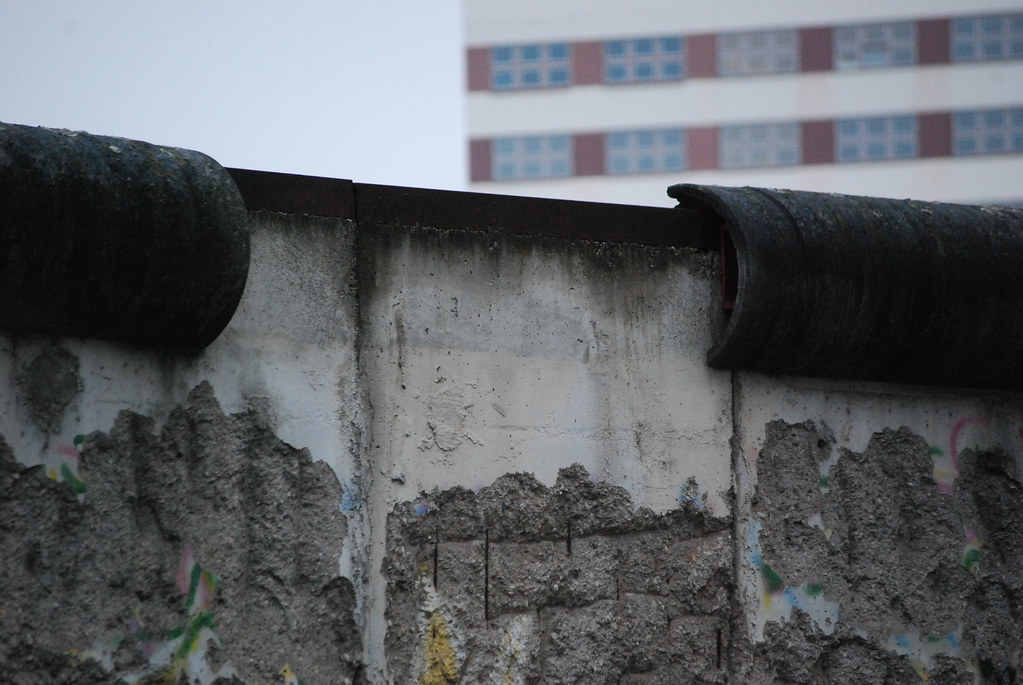
| Eventually the walls were capped with this circular tubing to increase the difficulty of escaping. This is a piece of the original wall that is located along a memorial site known as the 'Topography of Terror'. |
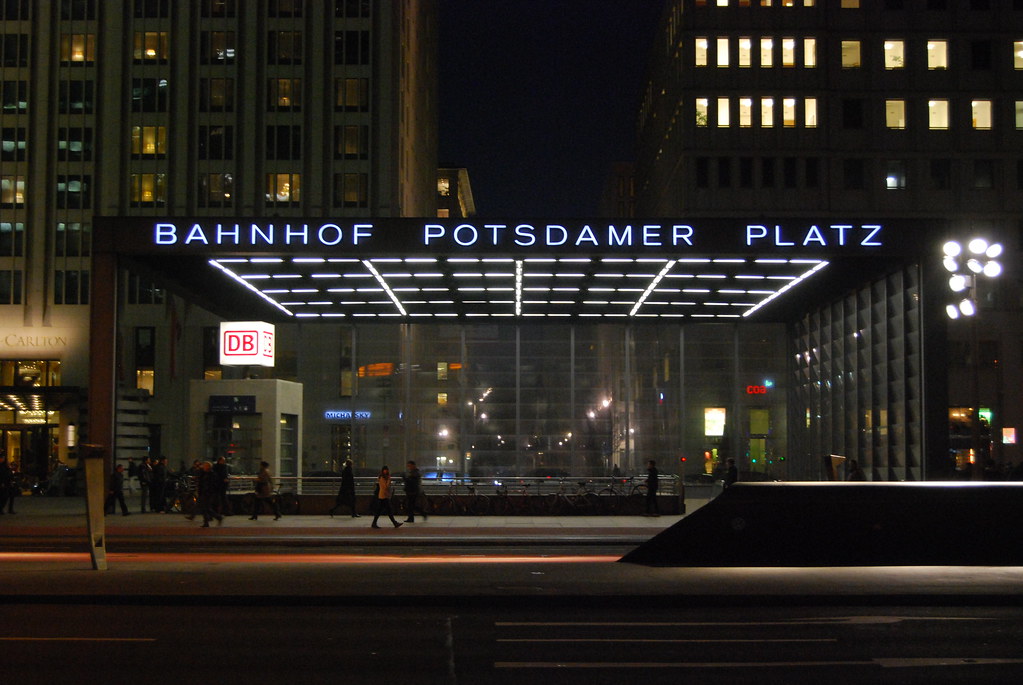
One of the most famous squares prior to the war and division of Berlin was Potsdamer Platz which was vibrant during the 20's and 30's, but was directly bisected by the wall in 1961. Potsdamer Platz offers a unique case study of overcoming/reconciling division in the built environment through major property development. It is now one of the busiest intersections in the city and has a number of well known pieces of post-modern architecture that were designed by internationally recognized firms. Unfortunately, the contemporary statement created on this site is often seen as a complete failure in its attempt to reunite the city in its built form. The surrounding skyscrapers and the overall site design completely overlook the importance of returning vibrant local interest in the area in exchange for international recognition, a cosmopolitan feel, and tourist attraction. On the two occasions that I visited the site I witnessed very few locals in the area who weren't in business suits hurrying to their nearby offices. Instead it was flooded with cars by day and by tourists next to cars in the evening snapping photos of the remnants of the wall and the famous architectural elements of the site. This was confirmed to me later by a friend who has lived in Berlin for sometime... None of his friends have nver visited Potsdamer Platz by choice.
 |
| Sign recognizing the route of the Berlin Wall immediately in front of the metro station. |
 |
| Three signature tours that seem at odds with each other as if each is attempting to stake its claim to the space with its architectural grandeur. |
 |
| View within the Sony Center which is surrounded by shopping, a theater and office space. |
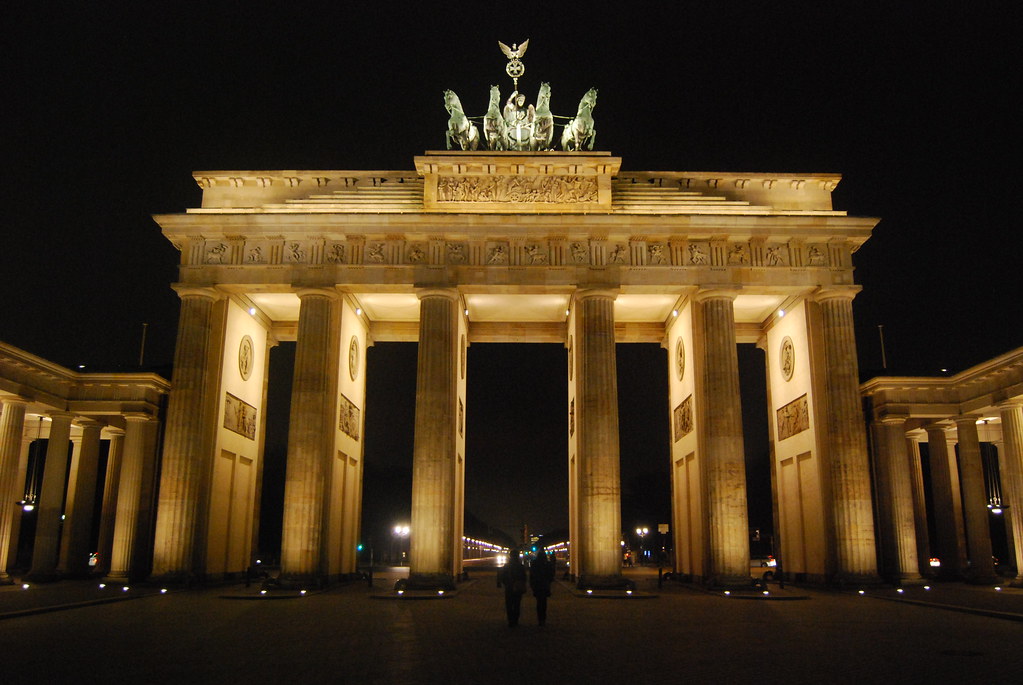
Brandenburg Gate became an internationally recognized location as well as a symbol of the Berlin Walls collapse in 1989 when television stations all over the world covered the dramatic events of the cities reunification.
An entire island along the river that runs throughout the city is dedicated to the major museums of Berlin. Museum Island is also home to the Berlin Cathedral (Berliner Dom) which can be seen in the following two photographs.
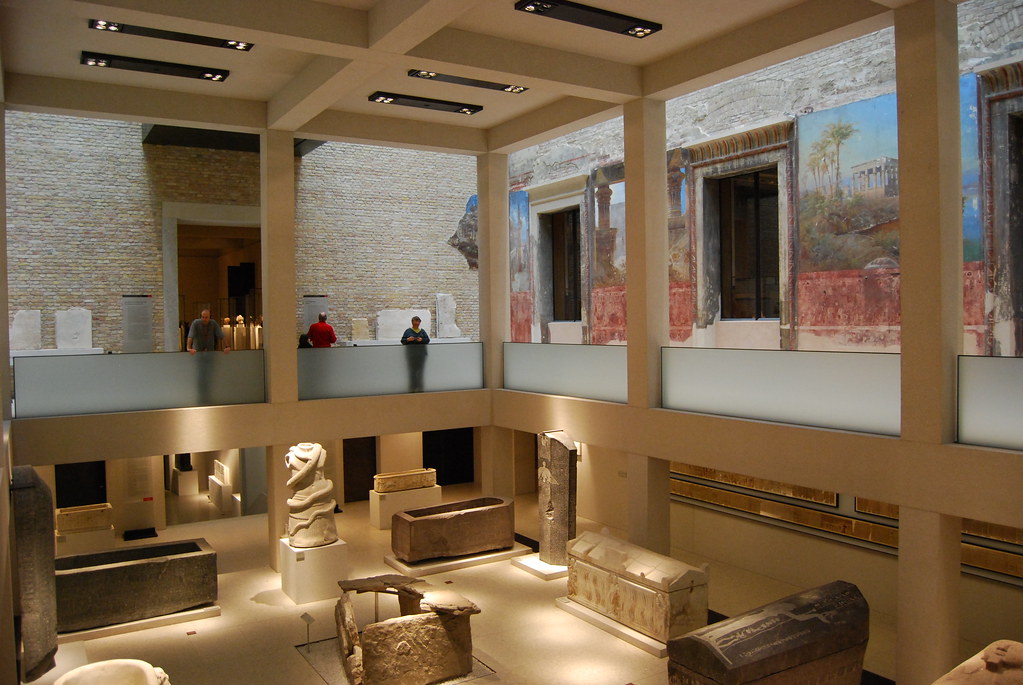
The Neues Museum is one of the most famous museums on the island and is specifically recognized as an extremely positive rehabilitation project by a famous contemporary architect (David Chipperfield). During World War II the museum was almost entirely demolished by bombing campaigns carried out on the city. However, many of the most special pieces of the museum were stored safely prior to the war and the impressive collection is back on display today. The building itself is extremely impressive considering the condition it was found in and the recreation undertaken by Chipperfield's office is carefully conscious of distinguishing what is old and new within the building. The building itself is a monument in Berlin.


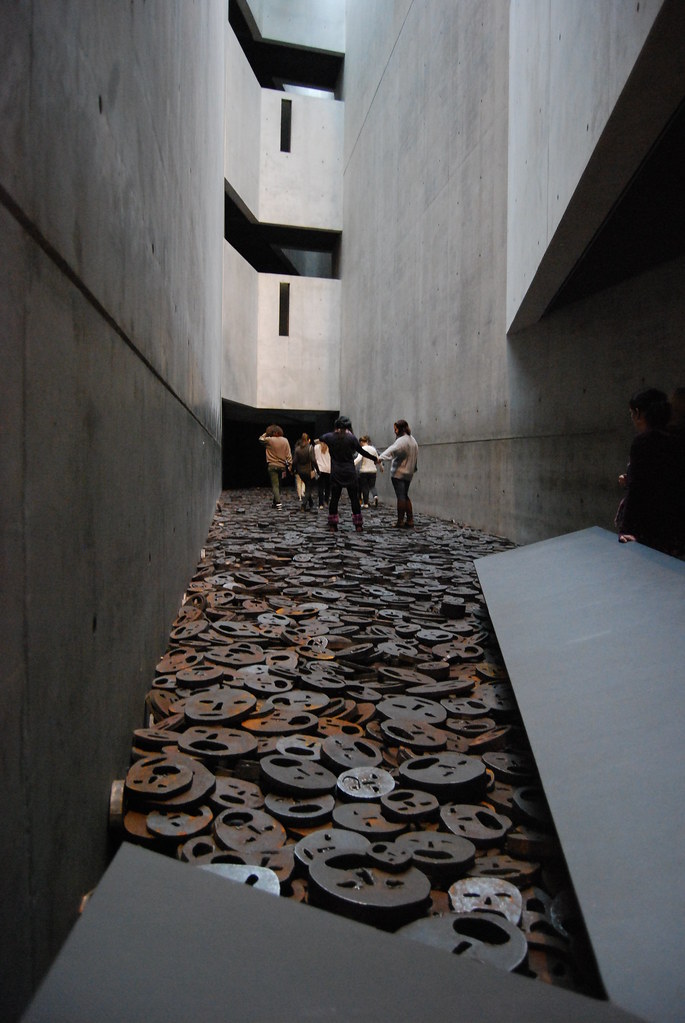
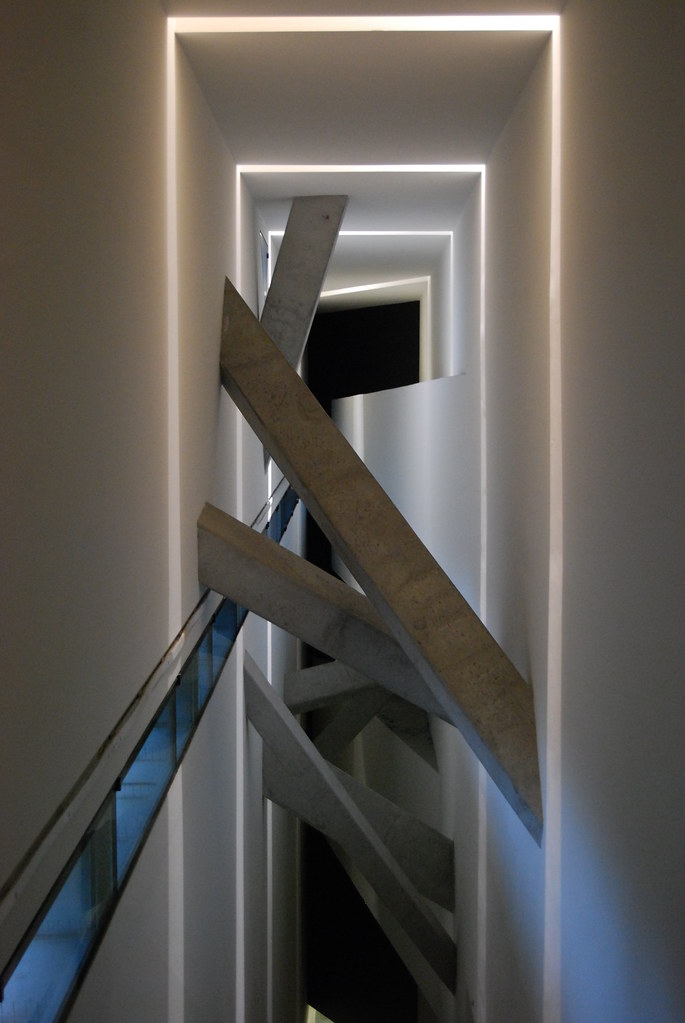
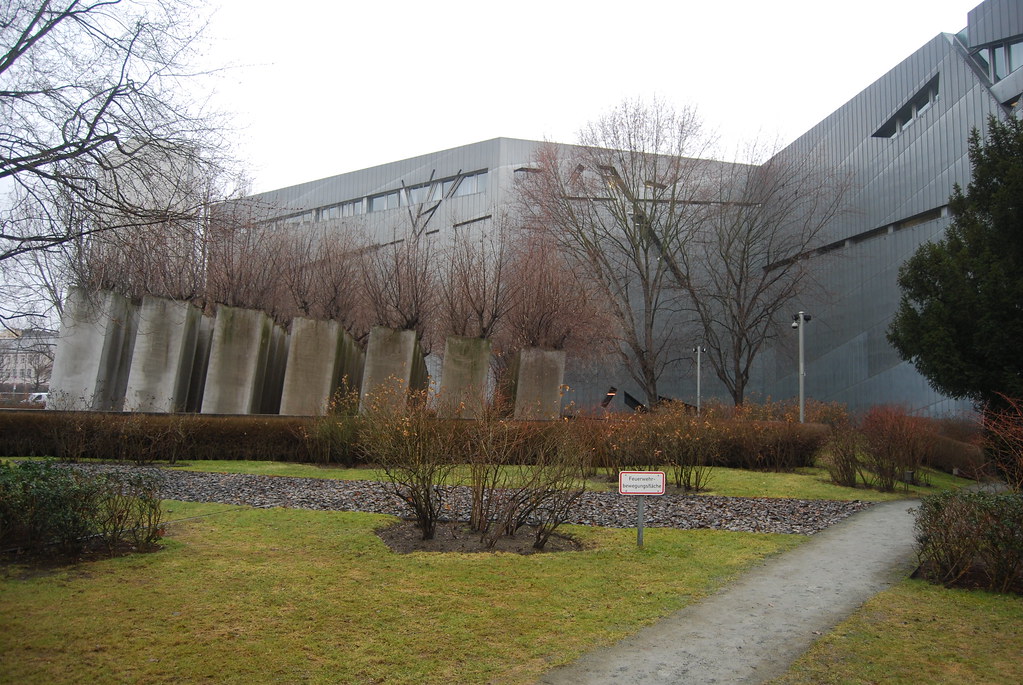
One of the most important museums that is not located on Museum Island is the Jewish Museum designed by Daniel Libeskind. This landmark addition to the museum is a world-famous for its physical form, which the architect calls 'the blitz'. The zig-zagging plan of the building and abstract openings create a series of very unique spaces within the building. Of these spaces, the voids between the main exhibition space are dedicated to interactive memorials of the holocaust.
 |
| This 'void' is filled with 10,000 iron faces which the visitor walks on into the dark end of the room in the background of this image. As you walk through the space the faces clank against one another (physically and audibly) offering an interesting opportunity to reflect on the history of oppression the Jewish people have faced. |
 |
| Angular supports and and openings throughout the exhibitions create unique spaces . |
 |
| Many of the exhibits themselves continued the abstract and interactive forms. These seats contained video screens were you could learn more about traditions in each of the three monotheistic religions. |
 |
| The leaning pillars on the left side of this image are within the 'Garden of Exile' which abstractly represents the disorienting feeling many Jewish families faced as they were expelled from their home countries and moved to new homes throughout the world. |