 |
| This Ferrari was parked just outside of the ghost town of Varosha in the Turkish-speaking community of Famagusta. This red Ferrari F430 has licence plates from the unrecognized, Turkish military occupied zone known as the "Turkish Republic of Northern Cyprus", is left side drive (when most cars are right side drive because they drive on the other side of the road), and is parked in front of the fence/barricades that block entrance to an entire town occupied by the Turkish military. Due to the various casinos that operate in that area of Famagusta, I'm guessing that the driver of this vehicle has connections and resources that I am better off not inquiring about in further detail. |
Friday, February 11, 2011
Photo of the Day - "Head Turning Car in an Unrecognized Country"


Wednesday, February 9, 2011
Cyprus vs. Sweden Soccer Match
Last night I attended the first half of a international friendly match between the Cypriot and Swedish national teams. By halftime the Cypriot team was down 2-0, which is the score they lost by.
The Swedish fans came out in surprising numbers and represented nearly half (I would guess) of the few thousand person crowd. I, myself, probably looked like a lost Swedish fan amidst the dark-featured Cypriots.
One issue I had with the game was that the Cyprus jerseys are blue and white... Making them look almost identical to the Greek national team. When I asked one the guys I was with why the jersey's were that color and almost identical (Cyprus' flag is an orange map of Cyprus on a white background with olive branches) he said, "We're brothers... It's basically the same team". I guess I missed the point of the CYPRUS NATIONAL TEAM.

 |
| Photo from last night's match. Notice the Cypriot national team jersey (jumping in blue): http://newshopper.sulekha.com/cyprus-sweden-soccer_photo_1697992.htm |
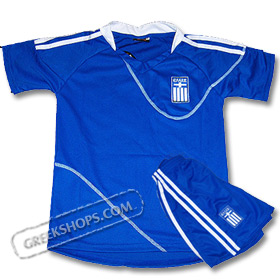 |
| Greek national team jerseys: http://www.greekshops.com/images//WORLDCUP2010_AWAY_CHILD.jpg |
I attended another soccer match in Cyprus last summer . It was a Champions League qualifying match for the Nicosia club team APOEL against Partizan F.K. of Belgrade, Serbia.
Monday, February 7, 2011
Road Trip - Famagusta, Varosha
FAMAGUSTA
This road trip was focused solely on the medieval port city of Famagusta.
Similar to Nicosia, the Venetian’s built a substantial fortification system around the city to prepare for the Ottoman siege of 1570. However, soon after their construction, both elaborate wall and bastion systems failed as the island fell to Ottoman rule.

 |
| Sea Gate |

 |
| Othello’s Tower, yes, Shakespeare’s Othello’s Tower, also known as the Citadel |
 |
| Here's a boy exploring the intricate system of passageways that lead to various defensive positions within Othello's Tower. In the foreground are cannonballs that were undoubtedly used by the Ottoman's during their siege. |
 |
Interesting use of a green roof atop a medieval archaeological site… I don't think neglect is a very sustainable technology though. |
Lala Mustafa Pasa Mosque, originally St. Nicolas Cathedral, is a gothic cathedral built in the 14th century while the island was under Lusignan (Frankish) rule. Upon the Ottoman siege of the city, a minaret was added on top of the bell tower and the interior was white-washed as it was converted into the main mosque in the city.


Many of the churches within the walls of Famagusta were destroyed during the Ottoman siege in 1571 or during one of the many earthquakes in the area during the following centuries. Those that weren’t destroyed during battle were converted into mosques, and many of those mosques were at least heavily damaged during the earthquakes as well. The skeletal remains of these churches and mosques can be found all over the city.


 |
These important architectural sites lie unkempt and open to weather and abuse. |
One specific church that I find interesting is St. George of the Greeks. This massive church is largely a ruin, but the remains create an interesting cross section that explains how the massive church was constructed.

 |
| The wall paintings in the apse of the church, which date back multiple centuries, bake in the sun all day and will continue to fade as long as they are uncovered. |
Unfortunately, the dangerous ruins of this church have become a playground for the local children and smells as though it is used as a public restroom from time to time. Although I appreciate the church being open for visitors to look around and explore, some serious care needs to be taken for the dangerous conditions on this site.
 |
| At ages 9, 10, 4, and 9 (left to right) this group of children has arguably the coolest but most dangerous playground I've ever seen. There were no parental figures in sight. |
 |
| Without being able to speak to them in Turkish, the boys would not listen to us as we told them repeatedly not to climb on the church for fear it would crumble beneath their feet. We stopped the little girl from following the older boys on multiple occasions. |
VAROSHA
On our way home we followed as closely as we could to the Turkish military border along the ghost town/former tourist capital of Varosha. The barbed wire and rusty barrels that wall off the Turkish military zone north of the Buffer Zone encloses an entire town, which has allowed the condition of the buildings within deteriorate steadily for the last 35+ years.


We stopped at a locked neo-classical school building that was just outside of the fenced off area. The eerie glow coming from within the front door and the overgrown front lawn made for a very disturbing site.


Subscribe to:
Posts (Atom)